Cognition in MS Patients: What Can You Do?

Cognition in MS Patients: What Can You Do?

Multiple sclerosis (MS) is a chronic, typically progressive disease that attacks the central nervous system. In MS patients, the body’s immune system breaks down the myelin sheath that covers and protects nerve cells. This results in communication problems between the brain and the rest of the body. MS can cause a wide range of cognitive…

The Benefits of Specific Exercises for Multiple Sclerosis Patients

The Benefits of Specific Exercises for Multiple Sclerosis Patients

If you have multiple sclerosis, exercise and activities are important for maintaining your mobility and independence.  It can help manage symptoms, reduce fatigue, and improve overall fitness. There are a variety of exercises and activities that can help you stay active, despite your condition. Here are a few to try: Walking: Walking is a great…

MS in Women

MS in Women

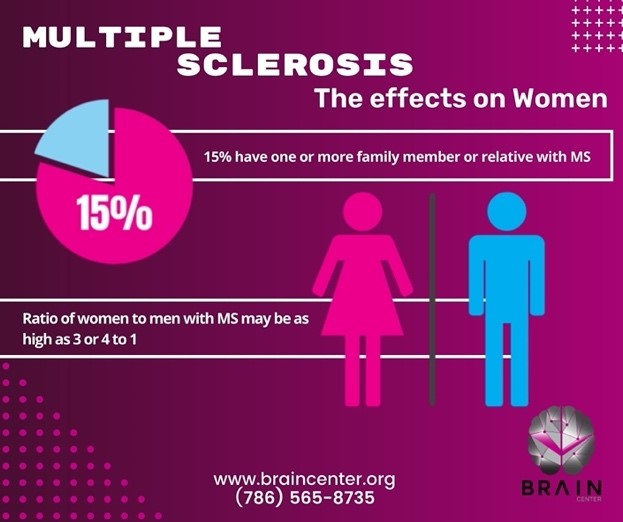
Multiple sclerosis (MS) is a chronic, degenerative disease of the nervous system that affects approximately 400,000 people in the United States. Of these, approximately two to three times as many women as men. The cause of MS is unknown, but it is believed to be an autoimmune disorder, in which the body’s immune system attacks…

Parkinson’s Sexual & Reproductive Health

Parkinson’s Sexual & Reproductive Health

Sexual issues are normal in individuals with Parkinson’s. These can originate from sickness, drug after effects or changes in self-perception. Open communication with your significant other and specialists is vital. Sexual Problems in Parkinson’s As with any subject that makes us slightly embarrassed, sexual issues frequently are hidden where no one would to look. The…

Parkinson’s and Impulse Control Disorder

Parkinson’s and Impulse Control Disorder

What are Impulse Control Disorders? Impulse Control Disorders (ICDs) are conduct aggravations in which an individual neglects to oppose the drive to act in ways that result in trouble or hindered social and work related relationships.  In Parkinson’s Disease (PD), ICDs are firmly connected with utilization of dopaminergic drugs, and most regularly include: Obsessive gambling…

Parkinson’s Disease and Palliative Care

Parkinson’s Disease and Palliative Care

Parkinson’s disease is an ever-evolving ailment of the focal sensory system that influences muscles and development. It grows bit by bit, some of the time beginning with a scarcely recognizable quake in one hand. While hand quakes are the most popular indication of Parkinson’s illness, the problem likewise causes muscle firmness, jolting, and other troubling…

How much time does it take to acknowledge a Parkinson’s diagnosis?

How much time does it take to acknowledge a Parkinson’s diagnosis?

A Parkinson’s diagnosis can be troubling, both for the patient and their loved ones.  Many individuals diagnosed with Parkinson’s disease might feel anxious, discouraged and apprehensive, while some might feel better to finally have an explanation that allows them to makes sense of their side effects. Feeling a flood of emotions is a typical response…

Would it be a good idea for you to Travel With Alzheimer’s?
|

Would it be a good idea for you to Travel With Alzheimer’s?

Alzheimer’s is a dynamic disease with side effects deteriorating over the long run. Regardless in the event that you’re traveling a brief distance for a family get-together or arranging a more drawn out get-away, cautiously gauge the advantages and disadvantages of going with a friend or family member with the disease. In the beginning phases…

Getting ready for the Future After a Dementia Diagnosis
|

Getting ready for the Future After a Dementia Diagnosis

Assuming that you or a friend or family member has been determined to have Alzheimer’s illness or a connected dementia, it very well might be challenging to think past the everyday. Nonetheless, making strides presently can help get ready for a smoother tomorrow. Over the long haul, the manifestations of Alzheimer’s and related dementias will…